

Your Ultimate Guide to Dream Space Flooring begins with a single question about how you want to feel when you step into a room. Flooring is more than a surface beneath your feet. It sets tone texture and durability for daily life. This article walks through real world choices and clear trade offs so you can pick a floor that fits lifestyle design goals and budget.
Whether you are planning a full remodel or updating a single room this guide lays out material pros and cons installation and maintenance tips plus style ideas you can use today. Read these sections for practical insights that help turn a room into a true dream space while avoiding common pitfalls.
Choosing the right material for your dream space flooring
The first decision is material type because wear resistance water tolerance and appearance vary widely. Ask three simple questions before you shop. How much foot traffic will the room see Who uses the room and what spills are likely And how long do you want the floor to last? Answering these will narrow choices quickly.
Here are fast summaries of common materials to consider
- Solid hardwood Warm rich appearance ages well with refinishing potential. Best for living areas and bedrooms. Sensitive to moisture and needs acclimation before installation.
- Engineered wood Looks like hardwood with better dimensional stability. Good where humidity fluctuates and for use over radiant heat.
- Luxury vinyl Highly water resistant or waterproof options available. Durable low maintenance and cost effective for kitchens baths and basements.
- Laminate Competitive pricing and good scratch resistance. Modern visuals mimic wood and tile but water damage risk remains with cheaper products.
- Ceramic and porcelain tile Extremely durable and waterproof. Ideal for bath and kitchen but may need rugs for comfort and warmth.
- Bamboo and cork Eco friendly choices with unique looks. Good comfort underfoot and natural insulation but product quality can vary.
- Carpet Soft durable options for rooms where warmth and noise control matter like bedrooms and media rooms.
Comparing popular flooring types with real examples
Comparisons help you match a product to a room specific scenario. Below are realistic examples that pair room type with a suitable material and why that choice works.
Hard surfaces for busy zones
Kitchen example choose a waterproof luxury vinyl plank with a textured surface to hide scratches and mimic wood grain. Bathroom example opt for large format porcelain tile to minimize grout lines and ease cleaning. Entryway example pick a glow resistant tile or a dense porcelain that resists mud and salt.
Comfort focused spaces
Bedroom example select engineered wood or wide plank hardwood with an area rug at the bed to add warmth and reduce creaks. Home office example choose a mid density carpet tile for sound control and easy replacement if stained.
If you want a wider overview of products and trade offs see a useful roundup of dream space flooring options that explains sample pricing and durability ratings for common categories.
Durability and maintenance practical rules
Durability is a combination of material hardness finish and installation quality. Look for abrasion ratings where available and understand what warranty covers. A few practical rules reduce upkeep and extend life.
- Use area rugs in high traffic corridors and near sinks to prevent wear and water exposure.
- Install felt pads under chair legs and move heavy furniture on sliders when rearranging.
- Maintain a consistent humidity range in the home to limit gaps or cupping in wood floors.
- For tile keep grout sealed and clean to prevent staining and water intrusion.
- For vinyl and laminate follow manufacturer cleaning recommendations to avoid wax buildup or finish stripping.
Installation and subfloor preparation essentials
Proper installation starts with a solid flat subfloor. Even high quality planks will show issues if the base is uneven or damp. Below are steps to get right before laying material.
Subfloor checks and prep
Measure for flatness use a straight edge and address high spots with sanding and low spots with a leveling compound. Remove old adhesives and confirm moisture levels especially on concrete slabs using a moisture meter. If moisture reads high add a vapor barrier or choose a waterproof floating product.
Installation tips that save money long term
Consider acclimation time for wood and engineered products to match indoor humidity. Stagger seams to avoid weak rows and plan expansion gaps where required. If you plan to install over radiant heat verify the product rating and follow temperature limits set by manufacturer.
Style and color selection for cohesive interiors
Your flooring choice should support room scale light and furnishings. Lighter floors expand a small space visually while medium tones hide dirt better than very light or very dark finishes. Grain pattern and plank width also affect perceived style.
- Small rooms try narrow planks or tiles laid diagonal to make the room feel larger.
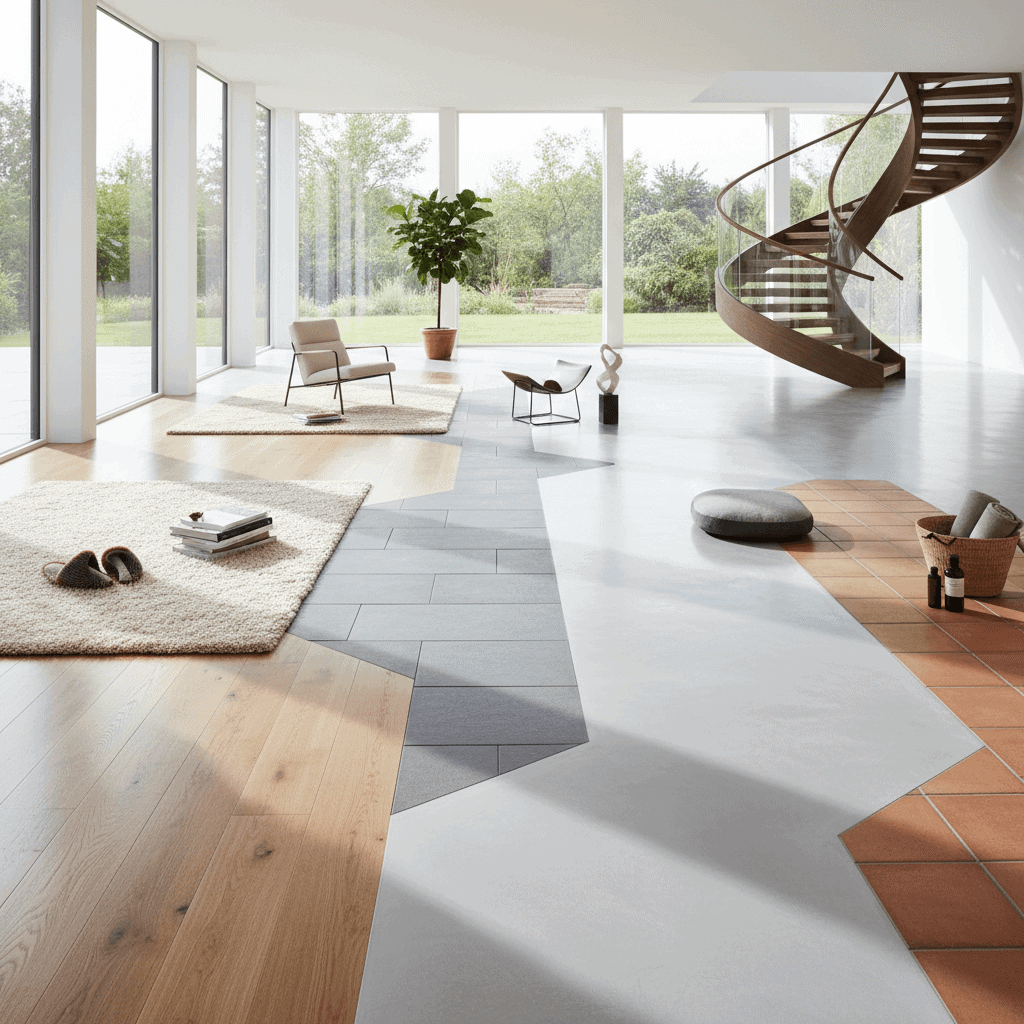
- Open floor plan use consistent flooring or a logical transition to maintain flow between spaces.
- High ceilings pair well with wider planks and lighter stains for a modern airy look.
- Traditional spaces often use medium to dark hardwood with tighter grain for a classic feel.
Budget planning and cost saving strategies
Flooring cost includes material labor underlayment trim and disposal of old flooring. Materials can range from low cost vinyl to higher cost hardwood. Factor in long term value not just initial price per square foot.
- Buy off cuts for small projects or accent areas to reduce waste.
- Compare installation quotes and ask about site prep costs that may be added later.
- Consider DIY friendly products like click lock planks for savings when confident with tools.
- Invest in higher quality finish on wood floors since refinishing frequency is lower with a strong top coat.
Health and sustainability factors to weigh
Indoor air quality and material sourcing are increasingly important. Look for low volatile organic compound labels and third party certifications when indoor air or allergy concerns exist. Rapidly renewable materials such as strand woven bamboo can be a good choice but verify manufacturing practices. Reclaimed wood offers character and reduces new harvest pressure but inspect for nails or damage before installation.
Consider lifecycle impacts too. A product that lasts longer will often have a lower environmental footprint over decades compared with a cheap product that requires replacement in a few years.
Making the final choice with confidence
Pull samples and view them in the room under different lighting and at different times of day. Bring home at least three candidate samples and live with them on the floor for a week to test how they look with your furniture and natural light. Test a small area for slip resistance and cleaning ease before committing.
When you have a shortlist ask suppliers for warranty details wear ratings and recommended maintenance routines. A straightforward talk with an installer about expected timelines and prep steps helps avoid last minute surprises.
Choosing flooring for a dream interior ties together functional needs aesthetic aims and budget limits. Start with a clear list of priorities pick materials that match those priorities and test samples in place. With planning and the right prep you will end up with a floor that supports daily life and stays looking great for years. If you want personalized suggestions try scheduling a showroom visit or request sample swatches to see how materials behave in your home. Make an informed pick and then enjoy the renewed look and comfort your space delivers.